Part 1: Briefly introduce yourself with the usual descriptors (year and major at DU, expected graduation, summer location and summer plans), and then give us a sense of your musical preferences – what bands, types of music, favorite show, etc. Include your primary email address.
I’m Esther Ki and I’m an upcoming third year majoring in Finance. I’m expecting to graduate in 2021 and I will be working for some part of the summer at home in Colorado Springs, but I will be traveling to multiple states for the remaining part of the summer. I personally do not have a particular genre that I prefer over the rest. I like to listen to different genre of music because I like to be exposed to new songs and artists. I like to keep my options open for music or shows or even movies, so I don’t think I have any favorites, but I have been listening to Korean music frequently to keep myself connected to my Korean identity. The best way to reach me would be through my email: esther.ki@du.edu.
Part 2: Album Review as Genre
A) What are three key features of an album review as a genre of writing? Why are these features important? Identify examples of these features in the reviews by Balm, Powers, and Derogatis as evidence.
To write an effective album review, there are three things that should be taken into consideration. First, if the writers know a lot about themselves and incorporate their “prejudices and ideals” into their writing, the review will be more effective. Also, the writers must realize that album reviews should be written as yourself. It is completely fine if writers incorporate their unique personalities into the writing because that makes the review more powerful. Finally, the reviews that are written do not always have to be “right.” Writers share their reviews based on their personal experience as well as their personality. These features are important in writing album reviews because when writers incorporate their personalities, experiences, and ideals into their writing, it seems more genuine and personal. When Ann Powers reviewed Daft Punk’s Random Access Memories, she openly discussed how the album was talking about identity and how there is no exact definition of masculinity. Despite all the different representation given about males and masculinity, there was not a lot of female representation or voice within the album. While it was mentioned how “Disco was explicitly tied to gay and (as writers like Alice Echols have shown) women’s liberation…” (25) but there was no female voice that represented this women’s liberation that the song was supposed to represent. Even though it may be a sensitive topic to discuss, Powers was not afraid about incorporating her thoughts and opinions and being open about it within the album review. When Ann Powers reviewed Daft Punk’s Random Access Memories, she openly discussed how the album was talking about identity and how there is no exact definition of masculinity. Despite all the different representation given about males and masculinity, there was not a lot of female representation or voice within the album. While it was mentioned how “Disco was explicitly tied to gay and (as writers like Alice Echols have shown) women’s liberation…” (25) but there was no female voice that represented this women’s liberation that the song was supposed to represent. Even though it may be a sensitive topic to discuss, Powers was not afraid about incorporating her thoughts and opinions and being open about it within the album review. On the other hand, Jim Derogatis’ review on Bookends involves the discussion of the “psychedelic explosion” that was occurring at the time the album was released and how the album was influenced by this new era that was beginning. Derogatis shared the experiences by providing examples of songs that were released that were heavily impacted by the period and how Simon & Garfunkel “continued [their] psychedelic experimentation.” He saw the connection between the new era that Simon & Garfunkel’s album Bookends portrayed with the songs that were included within the album. To share his personal intake on the album, Derogatis shared his opinion through detailed descriptions of each song and shared his personal perspective on each song to discuss the deeper meaning behind the song. Trixie A. Balm’s review of The Dictators’ Go Girl Crazy talks about her personal intake on the lyrics that were included within the album. Although some of the lyrics show “macho attitudes,” the author discusses how it is not much of a problem because of how she personally feels “flattered” by this female worshiping in their lyrics. She sees humor despite the album being “vulgar.” To write an effective album review, there are three things that should be taken into consideration. First, if the writers know a lot about themselves and incorporate their “prejudices and ideals” into their writing, the review will be more effective. Also, the writers must realize that album reviews should be written as yourself. It is completely fine if writers incorporate their unique personalities into the writing because that makes the review more powerful. Finally, the reviews that are written do not always have to be “right.” Writers share their reviews based on their personal experience as well as their personality. These features are important in writing album reviews because when writers incorporate their personalities, experiences, and ideals into their writing, it seems more genuine and personal. When Ann Powers reviewed Daft Punk’s Random Access Memories, she openly discussed how the album was talking about identity and how there is no exact definition of masculinity. Despite all the different representation given about males and masculinity, there was not a lot of female representation or voice within the album. While it was mentioned how “Disco was explicitly tied to gay and (as writers like Alice Echols have shown) women’s liberation…” (25) but there was no female voice that represented this women’s liberation that the song was supposed to represent. Even though it may be a sensitive topic to discuss, Powers was not afraid about incorporating her thoughts and opinions and being open about it within the album review.
B) What background information about Courtney Barnett (and her music) does Amanda Petrusich weave into her review about “Tell Me How Your Really Feel?” How does that information (which often isn’t about the album being reviewed) help the reader better understand Barnett and her new album?
To review Tell Me How You Feel, Amanda Petrusich begins by mentioning the singer’s singing style and how the singer often sings about anxiety and depression, but her vocal is unbothered regardless of the anxiety and depression. The writer incorporates how the singer signed an “open letter that criticized sexism in the Australian music industry.” By mentioning the singer’s involvement in these social issues, it helps the audience understand what values the singer embraces and what she finds most important when she is delivering her music. It helps the readers to understand what message the singer wanted to deliver through her new album (especially through the lyrical content as well as the tone/style that she sings).
Part 3: Pick an album released this year, preferably by an artist who is not mega-famous, and write a 600 word review of the album, suitable for publication in NPR, Noisey, Consequence of Sound, Pitchfork, or a similar site.
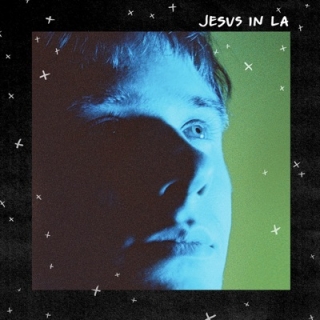
As one of the rising American singer songwriters, Alec Benjamin just released a new single called Jesus in LA on July 16, 2019. Alec Benjamin’s new single Jesus in LA provides an interesting account of the singer recollecting on his disappointment and isolation that he had to face when he had moved to Los Angeles to pursue his music career. The song starts off with a guitar strumming as he starts his recollection of when he “shook the hands with the devil” when he was given false hope of starting up his music career at a young age.
The artist shared his personal experience from leaving home at an early age to start his career. Alec Benjamin had moved to Los Angeles leaving everything behind in his hometown Phoenix.
When they sold you the dream you were just 16//Packed a bag and ran away//And it’s a crying shame you came all this way//‘Cause you won’t find Jesus in LA.
Despite his effort to follow his dreams, he was left alone as he was dropped from the label (Columbia Records). Even though the story behind Jesus in LA was considered to be one of the hardest times, the artist keeps an upbeat melody while repeating the lines ‘Cause you won’t find Jesus in LA. Throughout the song, the song is matched with a casual upbeat and the nonchalant voice of Alec Benjamin as he was still searching for hope. As the artist sings:
I’ve been looking for my savior//looking for my truth//I even asked my shrink//He brought me down to his level//Said, ‘Son, you’re not special//You won’t find him where you think.’
The artist’s use of Los Angeles is a symbol of hope and dreams, but he uses the absence of Jesus to imply his journey on realizing how to find happiness, hope, and success.
He sings,
And that is when I knew that it was time to go home//And that is when I realized that I was alone//And all the vibrant colors from the lights fade away//And I don’t care what they say
Los Angeles wasn’t what the artist was looking for in the end. It wasn’t the hope and happiness that he had in mind. The singer was able to recognize that this was not where he wanted to be. In fact, he had already had happiness when he was with the people that he loved (his family and friends). His happiness was already within him, he just never realized this fact. After the release of Jesus in LA, the artist said, “hope and happiness isn’t always where you think you’ll find them.”
After being dropped from his record, the artist continually created demos on his iPhone and uploaded his demos to YouTube, but he wasn’t recognized until 2017 when his song was used during an audition for America’s Got Talent. Since 2018, he signed with Atlantic Records and released his debut single Let Me Down Slowly, which entered into the Billboard Hot 100 and was certified as gold.
Alec Benjamin had began as an “isolated, lonely artist” that had just dropped out of college and struggling to make a living through gigs to selling out tours in Hong Kong, Japan, Korea, Singapore, Europe, and the United States.
After his successful debut single, Alec Benjamin have been releasing numerous singles to share his story. Benjamin shared that he is just a narrator rather than a singer songwriter. His lyrics allow all listeners to illustrate images and create nostalgic memories, creating a relatable story for everyone.
 OFF THE RECORD